Pular para o conteúdo
  • Cursos
    • Cursos de Verão
    • Cursos Anuais
  • Sobre
  • Loja
    • Já sei falar Português (PLH)
    • Quero aprender a falar Português (PLE)
    • Natal
  • Conteúdos
    • Blog
    • Blog alunos
    • Jogos Educativos Português
    • Jogos e atividades de natal em português
  • Contactos
  • English
  • Cursos
    • Cursos de Verão
    • Cursos Anuais
  • Sobre
  • Loja
    • Já sei falar Português (PLH)
    • Quero aprender a falar Português (PLE)
    • Natal
  • Conteúdos
    • Blog
    • Blog alunos
    • Jogos Educativos Português
    • Jogos e atividades de natal em português
  • Contactos
  • English
0.00 € 0 Cart
Login
  • Cursos
    • Cursos de Verão
    • Cursos Anuais
  • Sobre Nós
  • Loja
    • Já sei falar Português (PLH)
    • Quero aprender a falar Português (PLE)
    • Natal
  • Conteúdos
    • Blog
    • Blog alunos
    • Jogos Educativos Português
    • Jogos e atividades de natal
  • Contactos
  • English
  • Cursos
    • Cursos de Verão
    • Cursos Anuais
  • Sobre Nós
  • Loja
    • Já sei falar Português (PLH)
    • Quero aprender a falar Português (PLE)
    • Natal
  • Conteúdos
    • Blog
    • Blog alunos
    • Jogos Educativos Português
    • Jogos e atividades de natal
  • Contactos
  • English

Quem é quem?

Português Língua Estrangeira (Quero aprender Português)

Partilhe este jogo
WhatsApp
Facebook
Twitter
LinkedIn
Email

Descobre mais jogos desta categoria

Apanha as palavras das partes do corpo
Jogar
Viagem espacial
Jogar
Quiz Dia de Portugal
Jogar
Loja online

Passatempos em Português

Curso de Verão C: O meu primeiro verão em português

Quantas bolinhas há?

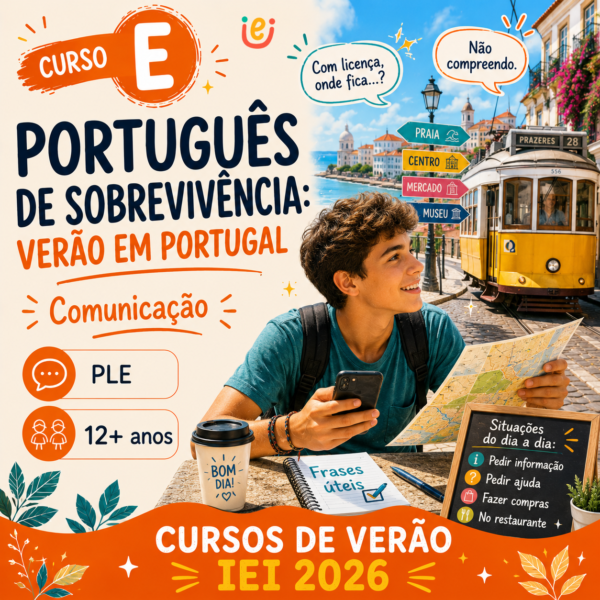
Curso de Verão E: Português de sobrevivência: verão em Portugal

Instagram
At the end of the school year, many parents start At the end of the school year, many parents start looking for “proof” of progress.
But in language learning, proof is not always about perfect sentences or correct spelling.
Very often, progress shows up first in behaviour. 🤍

Here are 3 progress markers parents sometimes miss:

1. Willingness
Does your child try more often?
Even if it’s short, mixed, or imperfect. Trying is progress.
2. Spontaneity
Does Portuguese appear without being requested?
A word here, a little phrase there… that’s the language becoming more available.
3. Transfer
Can your child use Portuguese in a new moment, not just in class?
With a different person, in a different room, or in a different situation. That’s real growth.

🌞 Coming to Portugal this summer?

The goal does not need to be “fluency in two weeks”.
Sometimes the real goal is much simpler:

- lighter moments with grandparents,
- a little more confidence at restaurants,
- and family lunches where your child feels safe enough to try.

That’s progress too.

📩 DM us your child’s age + what feels hardest right now:
speaking, reading, or writing.

We’ll help you choose the next focus, without overwhelm.

PT

No final do ano letivo, muitos pais começam a procurar “provas” de progresso.
Mas, na aprendizagem de uma língua, a prova nem sempre está nas frases perfeitas ou na ortografia correta.
Muitas vezes, o progresso aparece primeiro no comportamento. 🤍

Aqui estão 3 sinais de progresso que os pais, por vezes, não notam:

1. Vontade de tentar
2. Espontaneidade
3. Transferência

🌞 Vêm a Portugal este verão?
O objetivo não tem de ser “fluência em duas semanas”.
Às vezes, o verdadeiro objetivo é muito mais simples:

- momentos mais leves com os avós;
- um pouco mais de confiança nos restaurantes;
- almoços de família em que o seu filho se sente suficientemente seguro para tentar.

Isso também é progresso.

📩 Envie-nos mensagem com a idade do seu filho + o que está a ser mais difícil neste momento: falar, ler ou escrever.

Ajudamos a escolher o próximo foco, sem pressão.
This is what realistic progress looks like when Po This is what realistic progress looks like when Portuguese stays usable, not “something to get right.” 🤍
And with one lesson per week, what happens between lessons matters more than parents think.
⠀⠀⠀⠀⠀⠀⠀⠀⠀⠀
📌 Save this for when you need to reset expectations.
📩 DM us if you want help choosing the right focus for the next 4–6 weeks (especially before summer in Portugal).
⠀⠀⠀⠀⠀⠀⠀⠀⠀⠀
PT
⠀⠀⠀⠀⠀⠀⠀⠀⠀⠀
O progresso real aparece quando a língua é para usar, não para “acertar”. 🤍
E com 1 aula por semana, o que acontece entre aulas faz muita diferença.
If we push reading and writing before a child can If we push reading and writing before a child can actively use the language, it often backfires. 🤍

Confidence drops, and Portuguese becomes something to “get right” instead of something to use.

In most cases, spoken language comes first. Literacy builds on top of that.

In 4–6 weeks, with consistency and exposure beyond the lesson, the child may:
✅ freeze less and participate more
✅ understand more without translation
✅ use short Portuguese words/phrases
✅ feel safer taking small risks when speaking

⏳ What usually takes longer:
reading confidence, spelling/writing consistency, longer texts, academic vocabulary and reducing errors.

With one lesson per week, progress depends greatly on what happens between lessons. Small exposure makes a meaningful difference.

At IEI Portuguese School, age alone doesn’t define the programme. We consider fluency/literacy level, context and goals: family connection, school support or moving to Portugal.

Many students begin in a Português Língua Estrangeira (PLE) pathway focused on communication, and later move into a Português Língua de Herança (PLH) pathway as oral confidence grows and literacy becomes the next step.

📩 DM us and we’ll help your child develop Portuguese at their own pace.

PT

Se insistirmos na leitura e escrita antes da criança conseguir usar a língua, isso muitas vezes tem o efeito contrário. 🤍

A confiança diminui e o português passa a ser algo “para acertar”, em vez de algo para usar.

Na maioria dos casos, a oralidade vem primeiro. A literacia constrói-se a partir daí.

Em 4–6 semanas, com consistência e contacto fora da aula, a criança pode bloquear menos, compreender mais sem tradução, usar palavras/frases curtas e sentir-se mais confortável a arriscar.

O que demora mais: leitura em voz alta, ortografia, textos longos, vocabulário académico e redução de erros.

Com uma aula por semana, o progresso depende muito do que acontece entre aulas. Pequenos momentos de contacto fazem diferença.

Na IEI Portuguese School, não definimos o programa só pela idade. Consideramos fluência/literacia, contexto e objetivos.

📩 Envie-nos mensagem e ajudamos o seu filho a desenvolver o português ao seu ritmo.
If your family is coming to Portugal in July/Augus If your family is coming to Portugal in July/August, this is your reminder:
Summer can help… or it can feel exhausting, depending on the starting point. 🤍
⠀⠀⠀⠀⠀⠀⠀⠀⠀⠀
Here’s the micro-focus for each type:
⠀⠀⠀⠀⠀⠀⠀⠀⠀⠀
1. The Family Reunion Trip
Goal: reduce pressure, increase participation.
Try: short “wins” + modeling (not forcing).
PT phrases: “Está tudo bem.” “Vamos com calma.” “Queres dizer…?”
2. The Trial Move
Goal: functional Portuguese for daily life.
Focus: speaking confidence + routines (not worksheets).
PT phrases: “Quero ___, por favor.” “Onde fica ___?” “Posso…?”
3. The School Wake-Up Call
Goal: literacy support (reading/writing) without shame.
Focus: 1 page, 1 line, 2 words — consistent, not intense.
4. The Mixed-Language Home
Goal: consistency without battles.
Focus: one daily ritual + one repeated home phrase.
PT phrases: “Bom dia, meu amor.” “Conta-me uma coisa.”
⠀⠀⠀⠀⠀⠀⠀⠀⠀⠀
✅ Want the right path for your child before summer?
DM us: age + what’s hardest (speaking/reading/writing) + your goal (summer / move / school).
⠀⠀⠀⠀⠀⠀⠀⠀⠀⠀
PT
⠀⠀⠀⠀⠀⠀⠀⠀⠀⠀
Se vai passar o verão em Portugal, o segredo é começar pelo ponto de partida real e não pela expectativa dos outros. 🤍
Envie-nos mensagem e ajudamos a definir o foco certo antes de julho/agosto.
Mixing languages isn’t confusion, it’s communicati Mixing languages isn’t confusion, it’s communication. 🤍

It’s often a sign that your child is actively building fluency.
What matters most is how you respond.

Instead of correcting with “Say it in Portuguese”, try modelling naturally:
”Ah, tu queres água.”
“E depois queres ir ao parque, é isso?”

This keeps the conversation flowing and that’s where real language development happens:
confidence first → more expression → sustained progress

🌞 If your family is coming to Portugal this summer, now is the ideal time to start preparing.

Starting early makes real-life moments with grandparents, at restaurants, around the table feel natural and easier to navigate.

📌 Save this for your next real-life moment
📩 DM us “summer” and we’ll help you define the right starting focus (speaking, reading or writing)

PT

Misturar línguas não é confusão, é comunicação. 🤍

Na maioria dos casos, é sinal de que a criança está a construir fluência.
O mais importante é a forma como o adulto responde.

Em vez de corrigir com “Diz em português”, experimente reformular naturalmente:
“Ah, tu queres água.”
“E depois queres ir ao parque, é isso?”

Isto mantém a conversa viva e é aí que a língua cresce:
primeiro a confiança → depois a expressão → depois o progresso

🌞 Se a sua família vem para Portugal no verão, este é o momento ideal para preparar.

Começar agora torna situações reais, com os avós, em restaurantes, em família, muito mais simples e naturais.

📌 Guarde para usar na próxima conversa
📩 Envie “summer” por mensagem e ajudamos a definir o melhor ponto de partida
Comment on LEARN to receive these ready-to-use ide Comment on LEARN to receive these ready-to-use ideas. 📖

At the end of the school year, tired children don’t need more pressure. 

They need play + small wins. 🤍
That’s why we love sticky notes games: they make European Portuguese visible, doable, and fun.

✅ Game 1: Word Hunt
Use labels like porta / mesa / cadeira / livro and play 
“Encontra a ___.”

✅ Game 2: Tiny Story Trail
Pick 3 or 4 labels and build a tiny story using:
“Era uma vez… / Depois… / No fim…”

If your child gets stuck, guide with questions: 
“Quem?” “Onde?” “E depois?”

Don’t correct too much.
Help them keep going.

These small games are a simple way to keep Portuguese present before the summer break,  without turning it into another school task.

📌 Save this and try it this week.

PT

No fim do ano letivo, as crianças cansadas não precisam de mais pressão.
Precisam de jogo, leveza e pequenas vitórias. 🤍

Usar notas adesivas tornam o português mais visível, simples e divertido, sem transformar a língua em mais uma tarefa escolar.

Guarde e experimente esta semana.
Seguir no instagram

Inspirar as crianças a aprenderem português, através da utilização de materiais únicos que desenvolvem competências linguísticas e culturais de forma eficaz e divertida.

A escola

  • Quem somos
  • Português Língua de Herança (PLH)
  • Português Língua Estrangeira (PLE)
  • Loja Online
  • Login Escola
  • Contactos

Outras ligações

  • Blog Geral
  • Blog Alunos
  • Jogos Educativos em Português
  • Jogos e Atividades de Natal
  • Políticas do site
  • Termos e Condições
  • Livro de reclamações

Contactos

  • +351 933 466 360
  • ola@iei.pt
Facebook-f Instagram Google
© 2026 iei – desenvolvido por Upscape Studio
© 2026 IEI – desenvolvido por
Upscape Studio